By She Voice
November 27th, 2026
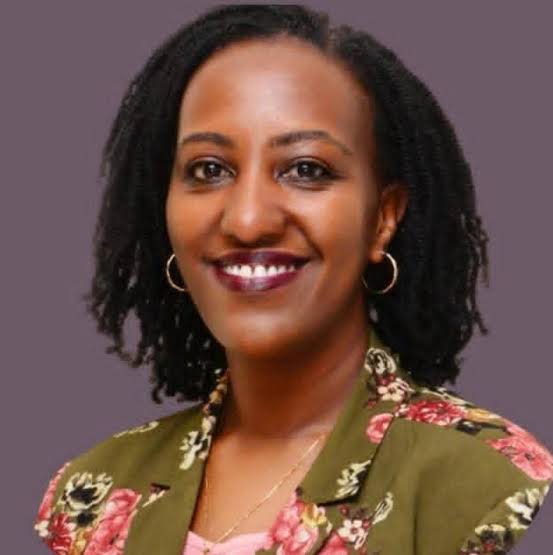
By Lydia Zigomo, Regional Director, UNFPA East and Southern Africa
Let me tell you about a girl called Nyasha.
She was 12 when her childhood was traded to settle a debt of twenty dollars. Her sister owed the money to a much older man and could not pay.
“So he took me as his wife,” Nyasha later told UNFPA colleagues.
At 13, she was pregnant. Her husband sent her away. She laboured for four days in her grandmother's rural home, and when it was over, her baby had no pulse and Nyasha's body was broken.
Obstetric fistula left her leaking urine and faeces.
“No one wanted me anymore,” she said.
Nyasha is from Zimbabwe. So am I.
My mother and countless women of her generation were nurses and midwives, helping Zimbabwean women bring children safely into the world. I often wonder what they would have seen in a girl like Nyasha.
Not a bride, not a debt, but a child who belonged in a classroom.
I have come to believe the distance between a girl who becomes a bride at 12 and a girl who grows up to lead is rarely talent, or the size of her dreams. It is whether, at the moment it matters, someone stands between her and the forces that would take her childhood away.
Nobody stood there for Nyasha.
And this is not only her story, it is ours.
It is about a girl in South Sudan, where more than half of young women were married as children. It is about a girl in Madagascar's dry south, where the rains failed and the weddings rose. It is about a girl in Cabo Delgado, driven from home by war, who at 16 is already a mother.
Across East and Southern Africa, more than 50 million women and girls were married as children; that is one in three of our young women.
Child marriage and early pregnancy travel together: our region has one of the highest adolescent birth rates in the world, 92 births for every 1,000 girls aged 15 to 19.
Worldwide, 12 million girls are married every year. At today's pace, the United Nations says, ending the practice could take 300 years.
Three hundred years. Nyasha could not wait, and neither can the girl born this morning.
Zimbabwe's Constitutional Court outlawed child marriage in 2016. Malawi changed its constitution, Mozambique passed a dedicated law and Zambia closed its customary loophole.
But a law is a promise, and each girl needs someone to keep it.
Here is what gives me hope.
Nyasha's story did not end in that room. ChildLine Zimbabwe found her, and surgeons at a UNFPA-supported camp repaired her body, for free.
She told them she wanted to go back to school.
And in Mbire, in the north of my country, a girl named Shami was promised to an older neighbour under kuzvarira, an outlawed practice in which poor families pledge a daughter to a wealthier household for food.
Then Shami found a UNFPA-supported girls' club. She told her mentor. Her mentor called the police. The wedding never happened.
Shami went to school, and later led that club. It is called Kodzero. In Shona, it means “our rights.” Someone stood there for Shami.
Across our region, people are learning to stand. In Ethiopia, 778 communities have publicly vowed to end child marriage. In Zambia, a film about a girl who refuses to marry is heading into classrooms, and the President, the African Union Champion on Ending Child Marriage, warns that Africa cannot achieve the “Africa We Want” if girls “continue to be robbed of their futures.”
So, on this first International Day for the Elimination of Child, Early and Forced Marriage, I ask our region's leaders to stand where someone should have stood for Nyasha.
Close every loophole, so that 18 means 18, in statute and in custom. Go to the girls the averages miss, district by district, with the data UNFPA now has.
Keep every girl in school, and open the door back for those who were pushed out, young mothers included. Give every girl the knowledge and care to protect herself, through life skills education and adolescent-friendly sexual and reproductive health services, so that one early pregnancy never leads to another.
Protect the safe spaces, because drought, war and aid cuts are when girls need them most.
Twenty dollars. That is what one girl's childhood was worth to one man in my home country.
Let our answer, as a region, be this: no girl's childhood is for sale. Not for twenty dollars. Not for a bag of maize. Not for a herd of cattle. Not ever.
Kodzero. Our rights. Hers too.