By Sharon Kyatusiimire
September 22nd, 2026
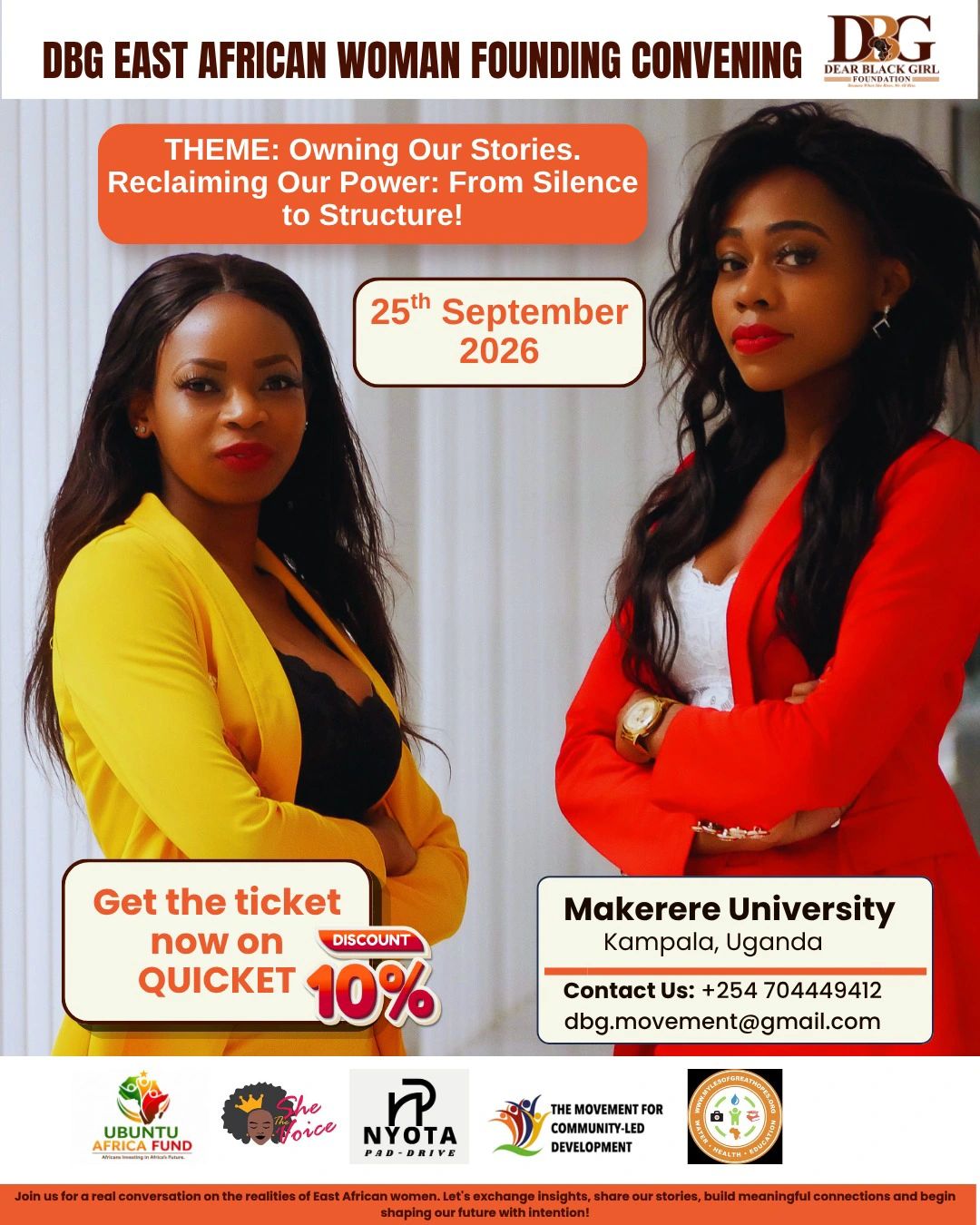
Women from across East Africa will come together this Friday, September 25, for the East African Woman Founding Convening, a gathering aimed at turning women’s lived experiences and stories into conversations about power, policy and structural change.
The convening, which will be held at Makerere University, will be held under the theme “Owning Our Stories. Reclaiming Our Power: From Silence to Structure.” It is organised by the Dear Black Girl Foundation, in partnership with She Voice Uganda, Ubuntu Africa Fund, Nyota Pad Drive, MCLD, Myles of Great Hopes and FAWE Uganda Chapter.
According to the organisers, the gathering will examine data alongside the lived realities of African women and create space for participants to begin developing frameworks and blueprints that can move women from silence towards structural power.
The meeting comes as the Pan-African, women-led movement, DBG Movement, expands its work beyond storytelling and personal empowerment to interrogate the systems and structures shaping the lives of Black women and girls.
Founded by Kenyan social impact strategist, author and systems thinker Teresa Muliro, the Dear Black Girl Movement centres women's stories as an important source of knowledge and a tool for social change.
The Kampala convening is expected to bring together women and girls, researchers, academics, policymakers, advocates, development practitioners, grassroots organisations and youth leaders to examine some of the challenges facing women in the region and consider how these can be addressed through more deliberate structural interventions.
According to Muliro, the convening forms part of a broader 2026/27 research focus, “The Plight of Women in Africa: A Reality We Can No Longer Ignore.”
“The movement's approach is rooted in the belief that women's experiences should not remain personal stories shared in isolation but can help reveal gaps in systems, institutions and policies,” she said.
Muliro's own journey is central to the movement's origins. Her memoir, Dear Black Girl: This Is My Story, Yours Too, explores experiences of childhood, trauma, poverty, family, loss and finding one's voice. The book later became the foundation for a wider movement encouraging Black women and girls to confront their experiences, reclaim their narratives and use their voices to influence change.
The movement has since expanded into conversations around women's economic agency, mental health, leadership, safety, storytelling and systems change.
Through DBG Voices, its storytelling platform, the movement has also created space for African and Black women to speak about experiences that are often overlooked or difficult to discuss publicly, including gender-based violence, reproductive health, period poverty and the pressures associated with women's expectations of resilience.
The organisation has increasingly sought to connect these personal experiences with broader questions about institutions and policy.
In recent conversations, Muliro has challenged the tendency to describe East African women simply as “strong”, arguing that celebrating women's resilience can sometimes obscure the structural conditions that require women to carry disproportionate burdens in the first place.
The movement has called for greater attention to issues including women's access to land, affordable credit, procurement opportunities, digital markets and growth capital, while also advocating for mental health to be integrated into systems serving women and girls.
The Kampala convening therefore seeks to move the conversation a step further, from documenting women's experiences to considering what should change as a result of those experiences.
The organisers have also been mobilising young women to participate in the gathering, including young ambassadors and university representatives in Uganda, in an effort to bring an intergenerational dimension to the conversation.
Susan Opok Tumusiime, Executive Director of the Forum for African Women Educationalists Uganda Chapter, has been announced as the chief guest.
For the Dear Black Girl Movement, the Kampala meeting represents an attempt to build a regional platform where women's stories are not only heard but examined alongside research, data and lived experience.
The central question will be whether those stories can help inform the structures that shape women's lives.
As the movement puts it, the journey is from silence to structure, a shift from simply telling women's stories to asking what those stories should change.
Sharon Kyatusiimire
Co-Founder & Executive Director, She-Voice Uganda. Gender Responsive Reporting and Communication Trainer, Journalist, Public Relations specialist, Content Developer, Women Empowerment Activist.