By Nicole Musiime
September 1st, 2026
There are conversations many African women have learned to have quiently.
A woman may know how to calculate her menstrual cycle, when to seek antenatal care, or how to protect herself from an unintended pregnancy. She may know where to go when she needs contraception or treatment for an infection.
But when fear, sadness, anxiety, shame or emotional exhaustion begin to take over her life, the conversation often becomes much harder.
She is told to be strong.
She is told that motherhood is supposed to make her happy.
She is told that pregnancy is a blessing.
She is told to pray.
But sometimes, what she needs is not another instruction to endure. She needs someone to ask a much simpler question:
“How are you really doing?”
Mental health and sexual and reproductive health are often discussed as separate issues. But for many women, they are deeply connected.
When reproductive health affects the mind
A woman’s reproductive journey can involve some of the most significant physical, emotional and social changes of her life.
Menstruation, pregnancy, childbirth, infertility, miscarriage, pregnancy loss, contraception, sexual relationships and menopause can all come with uncertainty, difficult decisions and immense emotional pressure.
For one woman, an unintended pregnancy may bring fear about how she will provide for a child. For another, infertility may bring grief, stigma or painful feelings of inadequacy. A mother struggling after childbirth may love her baby deeply while also feeling overwhelmed, exhausted or emotionally disconnected.
These experiences should not be dismissed simply because motherhood, marriage and sexuality are considered normal parts of life.
A woman’s emotional ability to cope and function matters just as much as her physical health.
The pressure to be “strong”
Across many communities, women are expected to carry enormous responsibilities.
She may be caring for children, supporting a partner, working, studying, running a business, caring for relatives and managing a household—all at the same time.
And when she begins to struggle emotionally, asking for help can feel like admitting failure.
That becomes even more dangerous in communities where conversations about mental health are surrounded by shame.
A woman experiencing depression or anxiety may not have the words to explain what is happening to her. A survivor of sexual or gender-based violence may blame herself. A woman dealing with infertility may withdraw from friends because she can no longer bear the repeated questions about when she will have a child.
Silence can make suffering invisible.
And when suffering becomes invisible, it becomes easier for society to ignore.
Sexual and reproductive health is more than pregnancy
Too often, sexual and reproductive health conversations are reduced to pregnancy prevention and childbirth.
But women’s reproductive wellbeing is much broader.
It includes the ability to make informed decisions about one’s body, access appropriate healthcare, understand contraception and fertility, receive respectful maternal care and seek help when something is wrong.
It must also include emotional wellbeing.
A woman should be able to ask questions about her sexual health without being mocked.
She should be able to seek reproductive healthcare without being judged.
She should be able to discuss contraception based on accurate information rather than fear and misinformation.
And she should be able to say that she is struggling emotionally without being labelled weak, ungrateful or unstable.
The women we do not hear
Some of the most important stories may never appear in statistics.
They belong to the young woman who became pregnant before she was ready and was terrified to tell her family.
To the mother who returned home after giving birth but felt emotionally lost.
To the woman who has spent years trying to conceive while watching friends and relatives become mothers.
To the survivor who is still trying to rebuild her sense of safety and dignity.
To the young woman with questions about contraception who is afraid that asking them will make people question her morality.
Their experiences remind us of something important: reproductive healthcare cannot truly be women-centred if we treat the body while ignoring the mind.
We need healthcare that sees the whole woman
The answer is not to turn every reproductive health experience into a mental health crisis.
The answer is to create healthcare and community systems where emotional wellbeing is recognised as part of a woman’s overall health.
Healthcare workers should be equipped to recognise when a woman may need additional psychological or social support.
Health facilities should make it easier for women to ask questions privately and without judgement.
Schools and communities should provide young people with accurate, age-appropriate information about sexual and reproductive health.
Partners should understand that reproductive decisions and emotional wellbeing are not solely a woman’s responsibility.
Families, too, need to learn that supporting a woman does not always mean telling her to “be strong.”
Sometimes support means listening.
Sometimes it means accompanying her to seek care.
Sometimes it means helping with responsibilities.
And sometimes, it simply means believing her.
From awareness to action
Talking about mental health is important, but awareness alone is not enough.
Women need accessible services.
They need trustworthy information.
They need healthcare workers who listen.
They need safe spaces where they can speak without shame.
They need communities that understand that seeking mental health support is not a sign of weakness.
They also need policies and programmes that recognise the realities women face, particularly those living with poverty, displacement, disability, violence or limited access to healthcare.
And women themselves must be part of designing the services intended to serve them.
Their lived experiences should inform health programmes, community interventions and public conversations.
Because a service designed without listening to women may solve the problem institutions see while completely missing the problem women actually experience.
We must change the question
Perhaps the conversation begins with one simple change.
Instead of asking a woman only:
“Are you physically okay?”
We should also ask:
“How are you feeling?”
Instead of assuming that a woman who has given birth is automatically emotionally well, we should check on her.
Instead of shaming a young woman for having questions about sexual health, we should make accurate information accessible.
Instead of telling women to silently endure every difficulty, we should create environments where asking for help is normal.
Mental health is not separate from women’s reproductive lives.
The body and the mind do not live separate lives.
When a woman is struggling with her reproductive health, her emotional wellbeing may also be affected. And when her mental wellbeing is suffering, it can shape how she experiences relationships, healthcare, pregnancy, motherhood and everyday life.
The solution begins with seeing the whole woman.
Not just as a mother.
Not just as a wife.
Not just as a daughter.
Not just as a reproductive body.
But as a human being with a mind, a body, choices, hopes, fears and a voice.
And perhaps the most important question we can ask is not simply whether women are surviving.
It is whether we are creating a society in which they can live, heal, make informed choices and be heard.

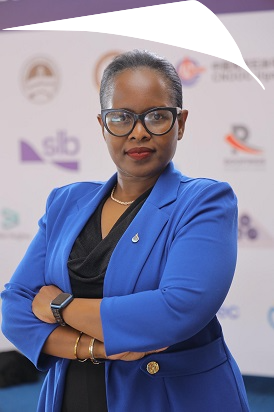
Nicole Musiime
Nicole Musiime is passionate about women’s health and wellbeing, with a particular interest in advancing conversations around mental health, sexual and reproductive health.